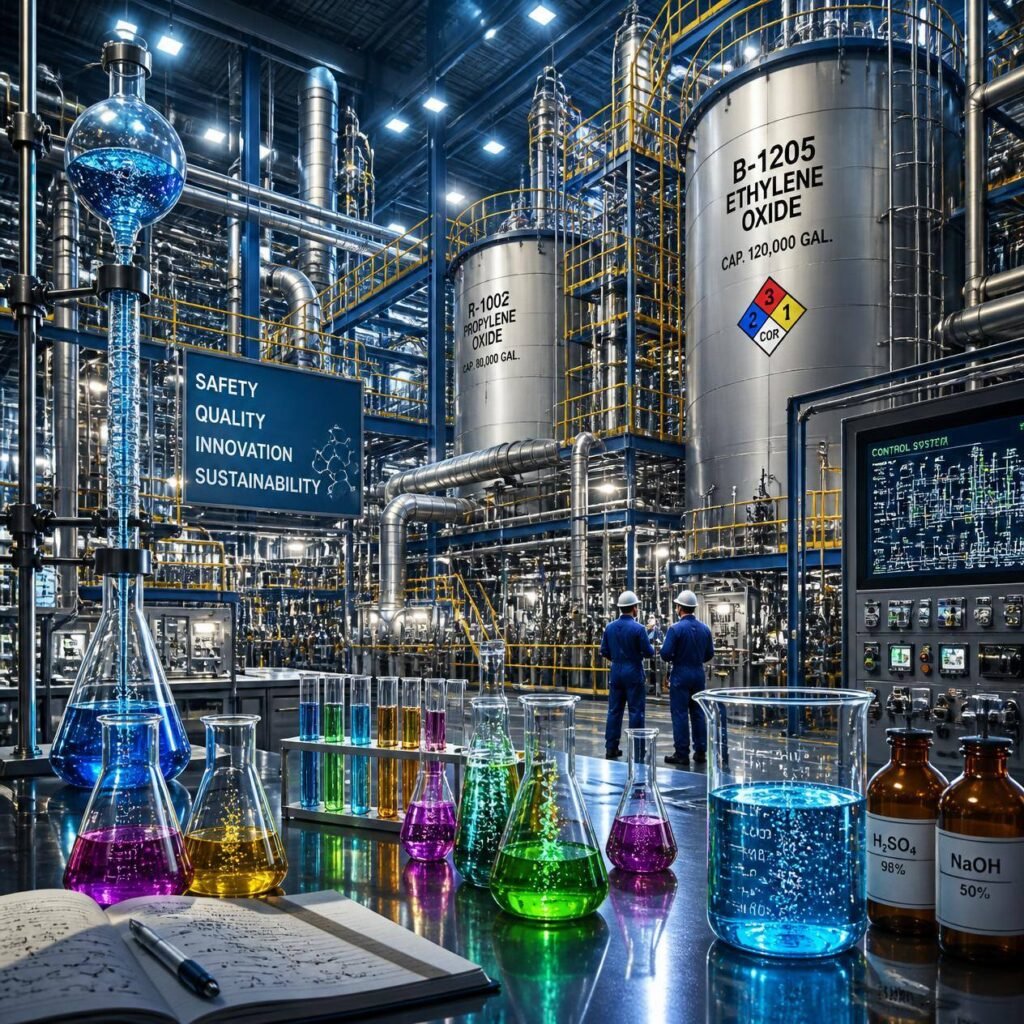
The Power Behind Production: A Complete Guide to Industrial Chemicals in Modern Manufacturing
Look around your room. The paint on your walls, the plastic shell of your laptop screen, the clothes you’re wearing, and even the purified water sitting in your glass—none of these would exist in their current form without industrial chemicals.
Often called the invisible backbone of the global economy, industrial chemical compounds quietly power almost every manufacturing process on earth. Yet, unless you work inside a chemical plant or supply chain operations, the sheer scope, versatility, and safety standards of these materials can feel like a mystery.
Whether you’re looking to optimize your factory procurement or simply curious about what drives modern manufacturing, here is your clear, comprehensive guide to the world of industrial chemicals.
What Are Industrial Chemicals?
At their core, industrial chemicals are chemical substances synthesized or harvested specifically for use in manufacturing, production lines, and industrial processing. Unlike household chemicals (like off-the-shelf bleach) or high-purity laboratory reagents, industrial-grade chemicals are manufactured in bulk—often by the thousands of metric tons—to supply large-scale commercial operations.
They serve diverse roles across supply chains:
- Raw Feedstocks: Primary compounds converted into secondary materials (e.g., ethylene turned into plastic resins).
- Processing Agents: Solvents, catalysts, and acids that facilitate chemical reactions during production.
- Maintenance & Treatment: Compounds used for industrial cleaning, water treatment, and equipment protection.
The Main Categories of Industrial Chemical Compounds
To make sense of the millions of compounds available today, the chemical industry broadly groups them into several key categories:
1. Industrial Acids & Bases (pH Regulators)
Acids and bases are essential for controlling chemical reactions, treating wastewater, and refining metals.
- Sulfuric Acid ($\text{H}_2\text{SO}_4$): Widely regarded as the “king of chemicals,” it is used heavily in agricultural fertilizer production, mineral processing, and petroleum refining.
- Sodium Hydroxide ($\text{NaOH}$ / Caustic Soda): A powerful alkaline chemical vital for paper pulping, textile manufacturing, and soap making.
- Hydrochloric Acid ($\text{HCl}$): Critical for pickling steel, regulating water pH, and manufacturing industrial polymers.
2. Solvents & Petrochemicals
Solvents dissolve other substances to create uniform mixtures, while petrochemical feedstocks form the building blocks for modern materials.
- Acetone & Methanol: High-efficiency industrial solvents used in coatings, pharmaceuticals, and adhesive manufacturing.
- Ethylene & Propylene: Gaseous hydrocarbons derived from natural gas or petroleum refining, used to create everyday polymers like polyethylene and polypropylene.
3. Disinfectants & Oxidizing Agents
Crucial for industrial hygiene, food safety, and municipal utilities.
- Sodium Hypochlorite & Chlorine: Fundamental for municipal water purification and bleaching textiles.
- Hydrogen Peroxide ($\text{H}_2\text{O}_2$): An eco-friendly bleaching agent and disinfectant that breaks down harmlessly into water and oxygen.
Key Industries That Rely on Chemical Processing
Without reliable chemical supply chains, global production lines would stall almost overnight. Some key sectors reliant on these chemicals include:
- Agriculture: Fertilizers like ammonium nitrate and pest control agents ensure high crop yields to feed a growing global population.
- Water & Wastewater Treatment: Industrial coagulants like Poly Aluminium Chloride (PAC) and activated carbon filter out contaminants to provide clean water for communities and factories alike.
- Automotive & Aerospace: High-performance epoxy resins, specialty coatings, and synthetic rubbers keep transport machinery lightweight, rust-free, and safe.
- Textiles & Construction: From dye fixatives that color fabrics to concrete admixtures that make skyscrapers earthquake-resistant, industrial chemistry forms the foundation of modern infrastructure.
Safety, Handling, and Storage Best Practices
Working with concentrated bulk chemicals requires strict compliance with international safety protocols. Proper chemical storage and workplace procedures safeguard workers, protect community ecosystems, and prevent costly facility downtime.
- Maintain Safety Data Sheets (SDS): Every chemical facility must keep accessible SDS documentation outlining health hazards, reactivity, and emergency contact details for every substance stored on-site.
- Wear Required PPE: Personal Protective Equipment—including heavy-duty nitrile gloves, full-face respirators, splash goggles, and chemical-resistant aprons—is mandatory during bulk transfer or mixing.
- Segregate Incompatible Materials: Never store strong acids (like sulfuric acid) alongside strong bases (like caustic soda) or flammable solvents. Utilize bunded spill pallets and temperature-controlled, well-ventilated storage rooms.
- Proper Labeling & Secondary Containment: Ensure all tanks, transfer pipes, and containers are clearly color-coded and labeled to prevent mix-ups during maintenance or emergency response.
The Future: Sustainability & Green Chemistry
As the manufacturing sector moves toward zero-emission targets, green industrial chemistry is rapidly transforming how chemicals are produced. Manufacturers are transitioning away from petroleum-derived feedstocks in favor of bio-based solvents, closed-loop water recovery systems, and energy-efficient catalytic processes.
By prioritizing sustainable sourcing and safer eco-friendly formulations, modern chemical suppliers prove that heavy industry and environmental responsibility can go hand in hand.
Conclusion
Industrial chemicals are far more than just substances in a tank—they are the foundation of innovation, safety, and comfort in our daily lives. By understanding their properties, optimizing their application, and holding tight to strict safety standards, industrial enterprises can continue driving economic progress sustainably.