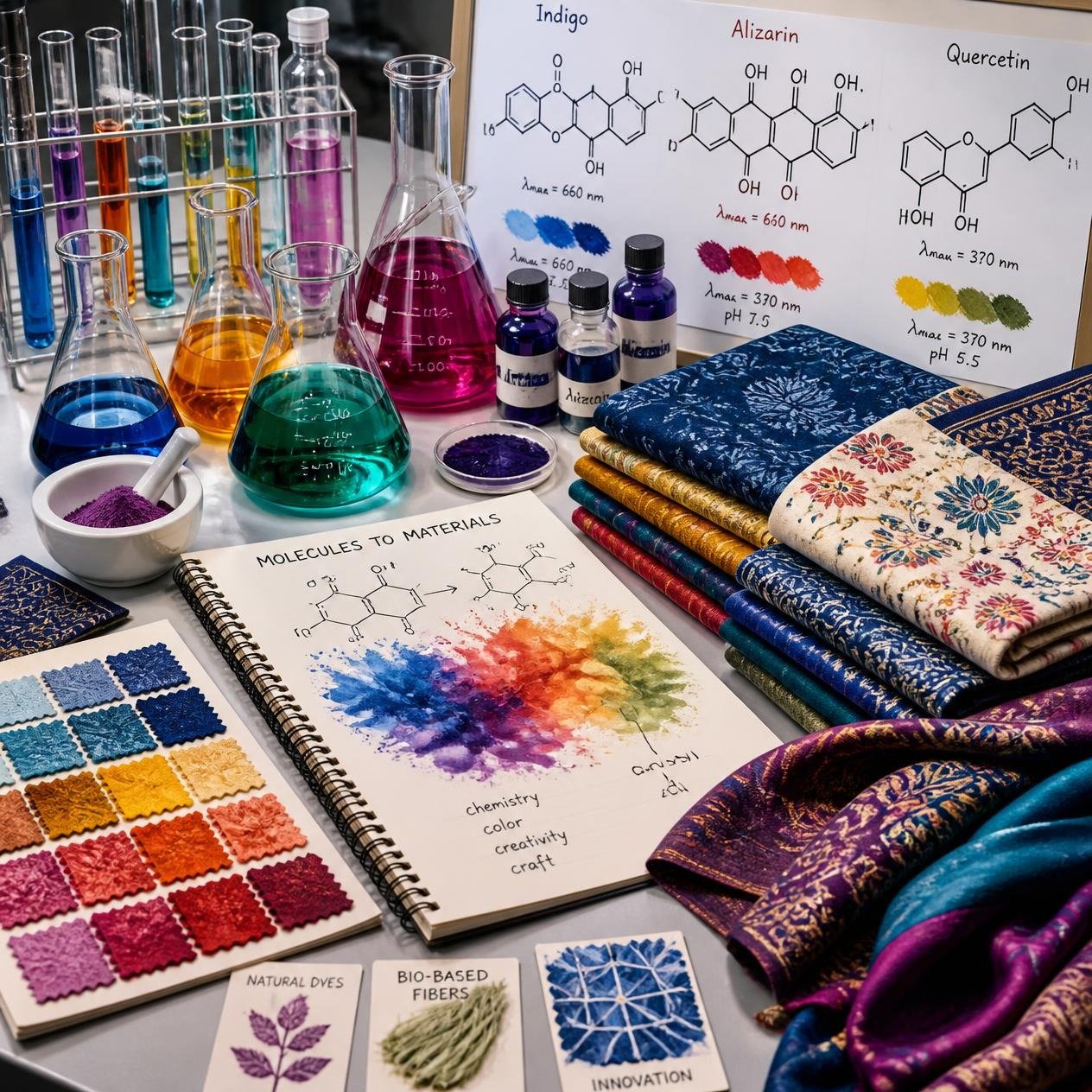
Dyes
Reactive Dyes: Disperse Dyes: Acid Dyes Basic Dyes.
Vat Dyes: These dyes are insoluble in water but are reduced to a soluble form for dyeing. They offer excellent colorfastness to light, washing, and chlorine.
PrintingThickeners – Control the viscosity of printing paste for sharp and uniform prints.Binders – Fix pigments onto fabric to ensure color durability after washing.Fixers – Improve color fastness by anchoring dyes or pigments to fibers.Dispersing Agents – Help evenly distribute pigments or dyes in the print paste.Softening Agents – Enhance the hand feel of printed fabrics without affecting print qualityCatalysts – Accelerate chemical reactions during curing or fixation for better performance.
Textile Chemical Technological Innovations
The textile industry is constantly evolving, and innovative chemical technologies are driving this change. Let us examine some of the most recent developments in the field:
Waterless Dyeing Technologies
Water scarcity and environmental concerns have prompted the development of waterless dyeing technologies. These advanced methods minimize water usage and decrease chemical waste, thereby enhancing the sustainability of textile manufacturing. Some of the emerging waterless dyeing methods include:
Supercritical Fluid Dyeing: This technique uses supercritical carbon dioxide as a solvent, which can penetrate fibers more effectively than water.
Solvent Dyeing: Solvents like perchloroethylene and hydrocarbon solvents are used to dye fabrics, but their environmental impact needs to be carefully considered.
Textile Chemicals Formulation
Textile chemicals formulation is the science behind enhancing fabric performance, feel, and functionality. From pre-treatment to finishing, each chemical blend is carefully designed to improve dye uptake, softness, durability, and environmental compatibility. Whether it’s water repellents, softeners,
Water Conservation Technologies:
Eco-Conscious Manufacturing Practices
Wastewater Processing:
Sustainable Sourcing:
Consumer Awareness Standards and Compliance Regulations
The textile industry operates under a sophisticated framework of regulations that are intended to maintain product safety and promote environmental conservation. Adherence to these standards is crucial for sustainable and ethical textile manufacturing.
REACH (Registration, Evaluation, Authorisation and Restriction of Chemicals)
OEKO-TEX Standard 100
Global Organic Textile Standard (GOTS)
Needf for Sustainable Manufacturing:
Chemical Management: Implement robust chemical management systems to identify, assess, and manage the risks associated with chemicals used in production.
Supplier Inspection: Perform rigorous inspections of suppliers to ascertain their conformity with environmental and social regulations.
Perform consistent product testing to validate compliance with established standards and regulations.
Transparency and Labeling: Deliver clear and reliable information about the environmental and social consequences of products.
Continuous Improvement: Adopt a proactive approach to identify and implement sustainable practices.t.
Sustainable Alternatives in Textile Chemicals.
Key Sustainable Alternatives
Enzyme-Based Technologies Bio-Based Chemicals Natural Dyes
Zero-Discharge Technologies
These technologies aim to minimize or eliminate wastewater discharge by treating and recycling effluent.
Advanced wastewater treatment systems can remove pollutants and recover valuable resources.
Textile Chemicals Market
The textile chemicals market is witnessing rapid growth driven by evolving fashion trends, technological advancements, and sustainability demands. These chemicals play a vital role in enhancing fabric properties like color, texture, strength, and functionality.Textile Chemicals Industries
Public Perception and Consumer Demand
Growing Environmental Consciousness: Consumers are increasingly recognizing the environmental and social consequences linked to the textile sector.
Demand for Sustainable Products: The surge in demand for textiles that are both sustainable and ethically produced is driving manufacturers to adopt greener practices.
Transparency and Traceability: Consumers expect transparency regarding the sourcing of raw materials, manufacturing processes, and chemical usage.
Cost of Sustainable Chemicals
Higher Initial Costs: Sustainable and eco-friendly chemicals often have higher upfront costs compared to traditional chemicals.
Investment in Research and Development: Achieving innovative and sustainable chemical solutions requires a major investment in research and development efforts.
Balancing Cost and Sustainability: Balancing the need for profitability with environmental responsibility can be challenging.
Textile Chemicals Name List
It is good to know the Textile Chemicals Name List items if you are in the textile chemicals industry. Your livelihood depends on it. Textile chemicals are essential for processing and finishing fabrics. Common names include softeners, wetting agents, dispersing agents, leveling agents, and fixing agents.
Tax Percentages for Textile Chemicals in India
Read our detailed blog on Tax Percentages for Textile Chemicals in India which offers a clear breakdown of applicable GST rates, exemptions.
Future Trends and Opportunities
The future of textile chemicals is bright, driven by increasing consumer demand for sustainable, functional, and innovative fabrics. Key trends shaping the industry include:
Bio-Based Chemicals
Reduced environmental impact: Bio-based chemicals often have a lower carbon footprint and reduced toxicity compared to traditional petrochemical-based alternatives.
Development of new and innovative products: Bio-based chemicals can be used to create a wide range of textile products, including fibers, dyes, and finishes.
Smart Textile Technology
Integration of electronics and sensors: Smart textiles can monitor vital signs, respond to environmental conditions, and provide personalized comfort.
Demand for functional fabrics: Consumers are seeking textiles with specialized properties, such as moisture-wicking, temperature-regulating, and antimicrobial.
Advancements in nanotechnology: The evolution of nanotechnology has led to the innovation of textiles featuring superior attributes, such as resistance to water, stains, and ultraviolet radiation.
Circular Textile Practices
Emphasis on recycling and upcycling: The circular economy model promotes the reuse and recycling of textile materials.
Development of chemical recycling technologies: Chemical recycling can recover valuable materials from textile waste, reducing the need for virgin resources.
Design for recyclability: By prioritizing recyclability in textile design, one can streamline the recovery and reuse of materials.
Digital Textile Printing
Reduced water consumption and chemical usage: Digital printing techniques require less water and chemicals compared to traditional dyeing methods.
Increased design flexibility: The method of digital printing enables the generation of personalized and distinctive designs.
Rapid prototyping and shorter lead times: Digital printing enhances the speed of production processes and decreases waste, thereby supporting rapid prototyping and reducing lead times
How Textile Chemicals Impact End Consumers
Textile chemicals play a crucial role in shaping the quality, feel, and longevity of fabrics, ultimately influencing the consumer experience and driving industry trends. Here’s a breakdown of how these chemicals impact end consumers:
Enhancing Fabric Performance
Durability: The use of chemicals can strengthen a fabric’s defense against wear and tear, leading to improved durability and a more prolonged lifespan.
Comfort: Softening agents and moisture-wicking finishes improve the comfort of fabrics, especially for activewear and loungewear.
Protection: Water-repellent, stain-resistant, and flame-retardant finishes protect fabrics from various environmental factors.
Improving Aesthetic Appeal
Colorfastness: Texture: Luster:
Potential Drawbacks and Consumer Concerns
Textile chemicals are beneficial but have risks attached:
Allergic Reactions: hey might irritate or cause allergies in sensitive individuals.
Environmental Impact: They might harm the environment if not handled properly.
Health Concerns: Exposure to certain chemicals during production or through consumer use may have adverse health effects.
In order to reduce these risks, it is vital to focus on the adoption of safe and sustainable textile chemicals. Consumers can also play a role by choosing products made from eco-friendly materials and supporting brands that prioritize sustainable practices.
News for Textile Chemicals in 2025
In 2025, the textile chemicals industry is witnessing a transformative shift driven by sustainability and innovation. Manufacturers are focusing on eco-friendly formulations, biodegradable auxiliaries, and waterless processing technologies to meet global environmental standards. Demand for bio-based and non-toxic chemicals is rising, especially in fashion and technical textiles. Digitization and smart textile solutions are also influencing chemical development. With stricter regulations and consumer awareness, companies are investing heavily in R&D to deliver high-performance, sustainable solutions. The future of textile chemicals lies in green chemistry, circular production, and enhanced process efficiency—reshaping the industry for a cleaner, smarter tomorrow. Read our detailed article on News for Textile Chemicals in 2025 to stay updated.
Conclusion
Textile chemicals are crucial yet frequently unacknowledged elements within the fashion industry, significantly improving the performance, aesthetics, and longevity of fabrics. From dyeing and finishing to imparting special properties, these chemicals shape the way we experience textiles.


Reviews
There are no reviews yet.